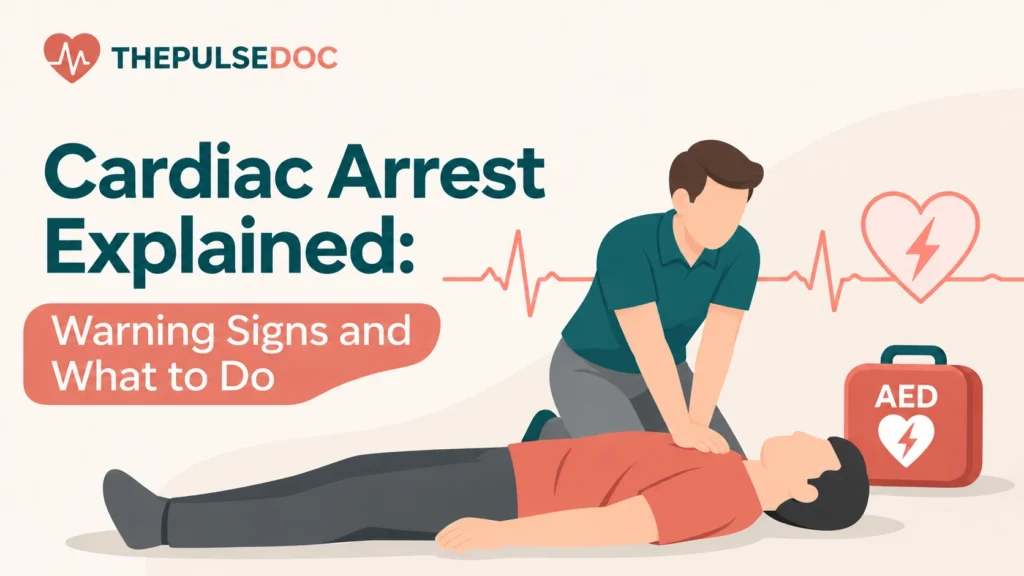
Imagine someone suddenly collapsing in front of you. You call their name, but they don’t respond. They aren’t breathing normally.
Would you know what to do?
This could be cardiac arrest, a life-threatening emergency where acting quickly can make a difference.
Many people have heard of cardiac arrest, but not everyone knows what it means or how it differs from a heart attack.
Let’s understand what happens during cardiac arrest, how to recognise it and what you can do to help.
1. What Is Cardiac Arrest?
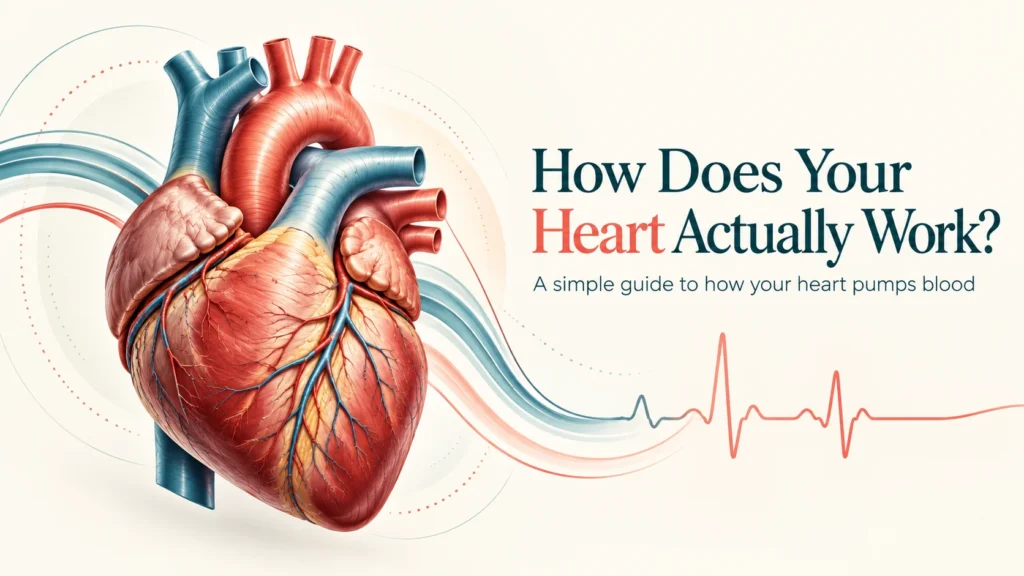
Your heart is a pump that keeps blood flowing around your body. It also has its own electrical system, which controls when the heart muscle contracts.
Think of this electrical system as the wiring that keeps the pump working in rhythm.
During cardiac arrest, the heart suddenly stops pumping blood effectively, often because of a serious problem with its electrical activity.
When this happens, blood can no longer reach the brain and other vital organs properly.
Within seconds, the person usually loses consciousness and stops breathing normally.
Without immediate treatment, cardiac arrest can cause death within minutes.
Cardiac arrest is a medical emergency that needs immediate CPR and the use of a defibrillator (AED) as soon as one is available.
Medical reference: American Heart Association — What Is Cardiac Arrest?
2. What Causes Cardiac Arrest?
Cardiac arrest can happen for several reasons.
One common cause is a dangerous abnormal heart rhythm, known as an arrhythmia.
For example, in ventricular fibrillation, the heart’s lower chambers quiver chaotically instead of pumping blood effectively.
Other possible causes include:
- Heart disease: Such as coronary artery disease or problems affecting the heart muscle.
- Inherited heart conditions: Some conditions affect the heart’s electrical system.
- Heart attack: A sudden loss of blood supply to the heart muscle can sometimes trigger cardiac arrest.
- Other serious emergencies: Such as severe oxygen deprivation, major blood loss or certain drug overdoses.
Cardiac arrest can sometimes happen without an obvious warning, even in someone who appeared well beforehand.
Medical references: American Heart Association — Causes of Cardiac Arrest and British Heart Foundation — Cardiac Arrest
3. How Can You Recognise Cardiac Arrest?
The signs of cardiac arrest are usually sudden.
Look for three important signs:
- Sudden collapse: The person falls or loses consciousness.
- Unresponsiveness: They don’t respond when you speak loudly or gently shake their shoulders.
- No normal breathing: They are not breathing, or they’re making occasional, unusual gasping sounds.
An important point about gasping
Sometimes a person in cardiac arrest makes irregular gasping noises. These are called agonal breaths.
They may sound like the person is struggling to take a breath, but gasping is not normal breathing.
If someone is unresponsive and isn’t breathing normally, assume they may be in cardiac arrest and act immediately.
You do not need to check for a pulse before starting CPR.
Medical reference: Resuscitation Council UK — 2025 Adult Basic Life Support Guidelines
4. Is Cardiac Arrest the Same as a Heart Attack?
No, although the two are often confused.
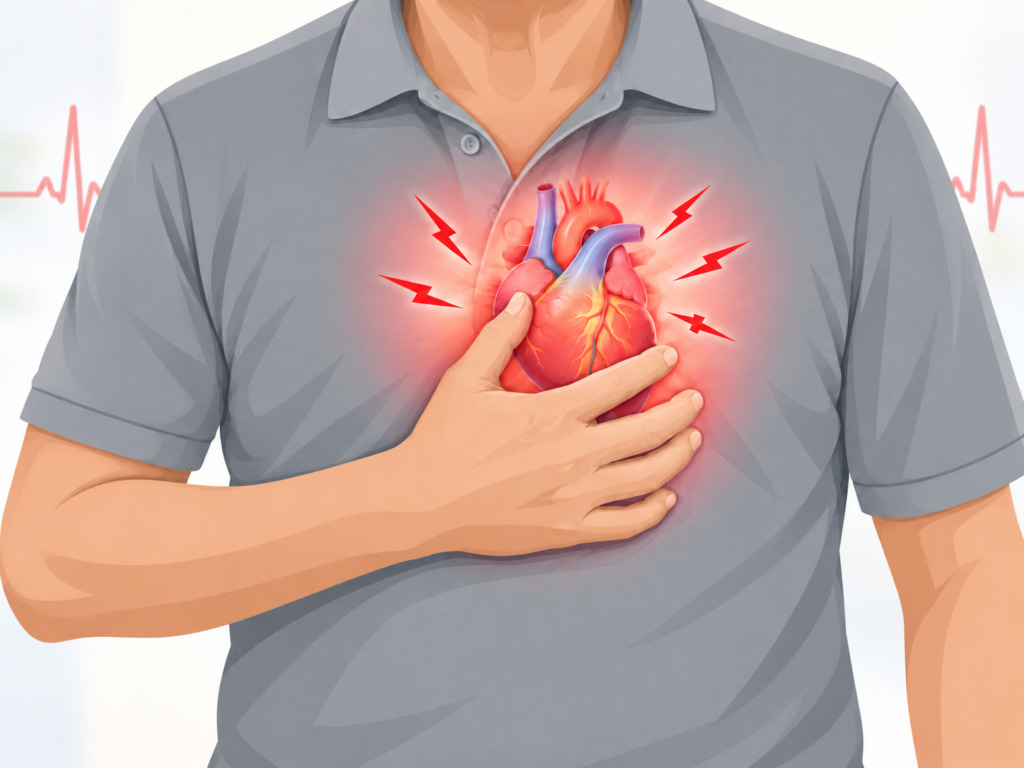
A heart attack usually happens when blood flow to part of the heart muscle becomes blocked. The heart generally continues beating during a heart attack.
Cardiac arrest, on the other hand, happens when the heart suddenly stops pumping blood effectively, often because of a dangerous electrical rhythm problem.
A heart attack can sometimes trigger cardiac arrest, but not every heart attack leads to cardiac arrest.
If you’d like to learn more about recognising a heart attack, read our article Heart Attack: 5 Warning Signs You Should Never Ignore.
Medical reference: American Heart Association — Cardiac Arrest vs Heart Attack
5. What Should You Do If Someone Has a Cardiac Arrest?
Recognising cardiac arrest and responding quickly can make a life-saving difference. If you suspect someone is in cardiac arrest, call emergency services immediately and follow the emergency dispatcher’s instructions.
Knowing a few simple steps can make a real difference.
Step 1: Check for a response and call for help
Make sure the surroundings are safe.
Speak loudly to the person and gently shake their shoulders.
If they don’t respond, call your local emergency number immediately.
Put your phone on speaker so the emergency dispatcher can guide you.
If someone else is nearby, ask them to help and find an automated external defibrillator (AED).
Step 2: Check for normal breathing
Look for normal breathing while following the dispatcher’s instructions.
If the person is not breathing normally, or is only gasping, treat this as cardiac arrest.
Do not delay CPR while trying to find a pulse.
Step 3: Start CPR
CPR stands for cardiopulmonary resuscitation.
It involves pressing on the chest to help keep some blood flowing to the brain and other vital organs.
For an adult:
- Place the person on their back on a firm surface, if possible without delaying CPR.
- Place the heel of one hand in the centre of the chest, with your other hand on top.
- Keep your arms straight and push firmly and quickly.
- Aim for 100–120 compressions per minute, pressing approximately 5–6 cm deep.
- Allow the chest to rise fully between compressions.
If you’re untrained or unable to give rescue breaths, continue chest compressions without stopping.
If you’re trained and willing to give rescue breaths, use 30 compressions followed by 2 breaths.
Follow the emergency dispatcher’s instructions throughout.
Step 4: Use an AED as soon as possible
An AED (automated external defibrillator) is a portable device that checks the heart’s rhythm and can deliver an electrical shock when needed.
AEDs are designed to guide users through the process with clear visual and spoken instructions. If an AED is available, turn it on and carefully follow its prompts.
The AED will tell you when to stop touching the person and whether a shock is advised.
Not every cardiac arrest rhythm needs a shock, but the AED is designed to assess this.
Continue CPR as instructed by the AED and emergency dispatcher until emergency professionals take over or the person shows clear signs of life and starts breathing normally.
Medical references: Resuscitation Council UK — 2025 Adult Basic Life Support Guidelines and American Heart Association — 2025 Adult Basic Life Support Guidelines
6. Can Someone Survive Cardiac Arrest?
Yes. People can survive cardiac arrest, particularly when help begins quickly.
The chances of survival depend on several factors, including what caused the arrest and how soon treatment starts.
Early CPR helps maintain some blood flow to vital organs, while an AED can treat certain dangerous heart rhythms.
According to the American Heart Association, CPR started immediately can double or triple the chances of survival after cardiac arrest outside a hospital.
This is why recognising cardiac arrest, calling for help and starting CPR without delay are so important.
Medical reference: American Heart Association — Emergency Treatment of Cardiac Arrest
The Takeaway: Recognise It. Act Quickly.
Cardiac arrest happens when the heart suddenly stops pumping blood effectively.
The person becomes unresponsive and is not breathing normally. They may also make unusual gasping sounds.
In this situation, every moment matters.
Remember three actions:
- Call your local emergency medical services.
- Compress the chest by starting CPR.
- Use an AED as soon as one is available.
You may never face a situation like this, but knowing what to do could help you save someone’s life.
Frequently Asked Questions (FAQs)
1. Does cardiac arrest happen only to older people?
No. Although some heart conditions become more common with age, cardiac arrest can also occur in younger people, sometimes because of an inherited or previously undiagnosed heart condition.
2. Can cardiac arrest happen without warning?
Yes. Cardiac arrest often happens suddenly. Some people may experience warning symptoms beforehand, but others collapse without any noticeable warning.
3. Can CPR restart the heart?
CPR doesn’t usually restart the heart on its own. It helps maintain blood flow while emergency treatment is provided. An AED can correct certain dangerous heart rhythms.
4. Is it safe for an untrained person to use an AED?
AEDs are designed for use by members of the public and provide step-by-step instructions. CPR and AED training is strongly encouraged, but if someone is in cardiac arrest, do not delay emergency action while waiting for a trained person. Follow the AED prompts and emergency dispatcher’s guidance.
Medical References
- American Heart Association. What Is Cardiac Arrest?
- American Heart Association. Causes of Cardiac Arrest
- American Heart Association. Cardiac Arrest vs Heart Attack
- British Heart Foundation. Cardiac Arrest — Causes, Symptoms and Treatment
- Resuscitation Council UK. 2025 Adult Basic Life Support Guidelines
- American Heart Association. 2025 Adult Basic Life Support Guidelines
- American Heart Association. Emergency Treatment of Cardiac Arrest
Medical Disclaimer: This article is for general health education and does not replace professional medical advice or practical CPR training. The CPR instructions described here apply primarily to adults. CPR techniques for infants and children differ. In a suspected emergency, call your local emergency medical services immediately.
Written and medically reviewed by: Dr. Laiba Tul Jannat
Website: THEPULSEDOC
General education only; not individual medical advice. Speak with a qualified healthcare professional about personal health concerns.
For a suspected emergency, call your local emergency service immediately.