Important: If you think you or someone else may be having a heart attack, call your local emergency services immediately. Do not wait to finish reading this article or attempt to drive yourself to the hospital.
When you imagine a heart attack, what comes to mind?
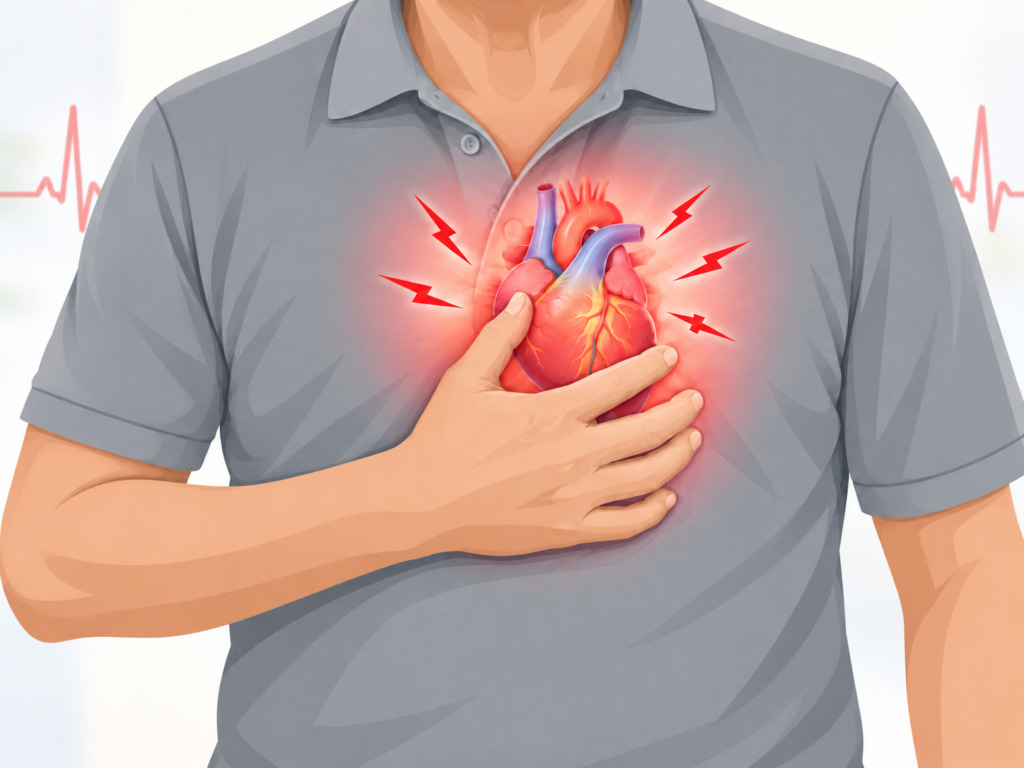
Probably someone suddenly clutching their chest and collapsing, just like in the movies.
But real heart attacks don’t always happen that way.
Some begin with noticeable chest pain, while others start with mild discomfort or symptoms that are easy to mistake for something less serious.
Knowing what to look out for can help you recognise a possible emergency and seek medical attention sooner.
Let’s understand what actually happens during a heart attack and the warning signs worth knowing.
First, What Actually Happens During a Heart Attack?
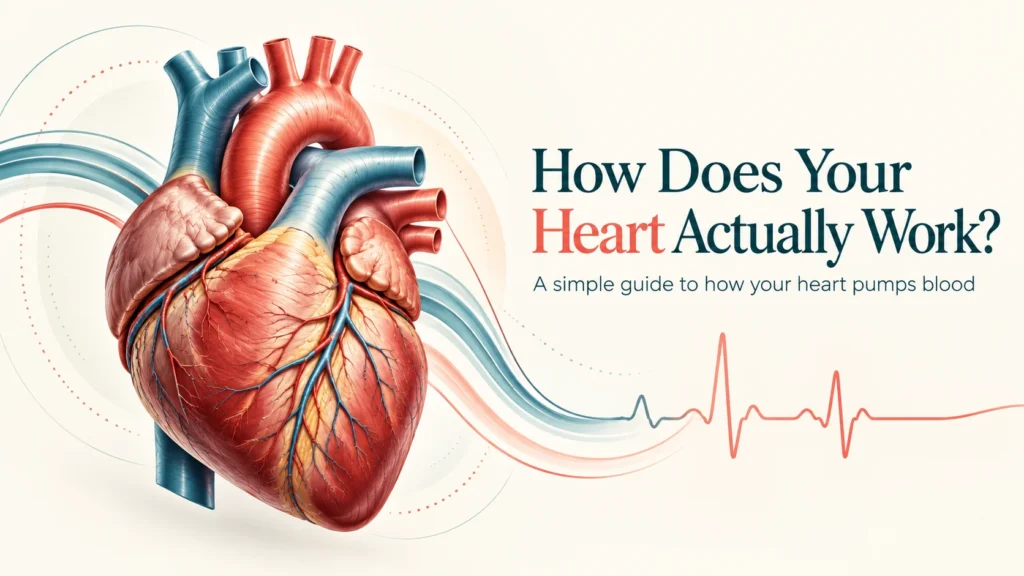
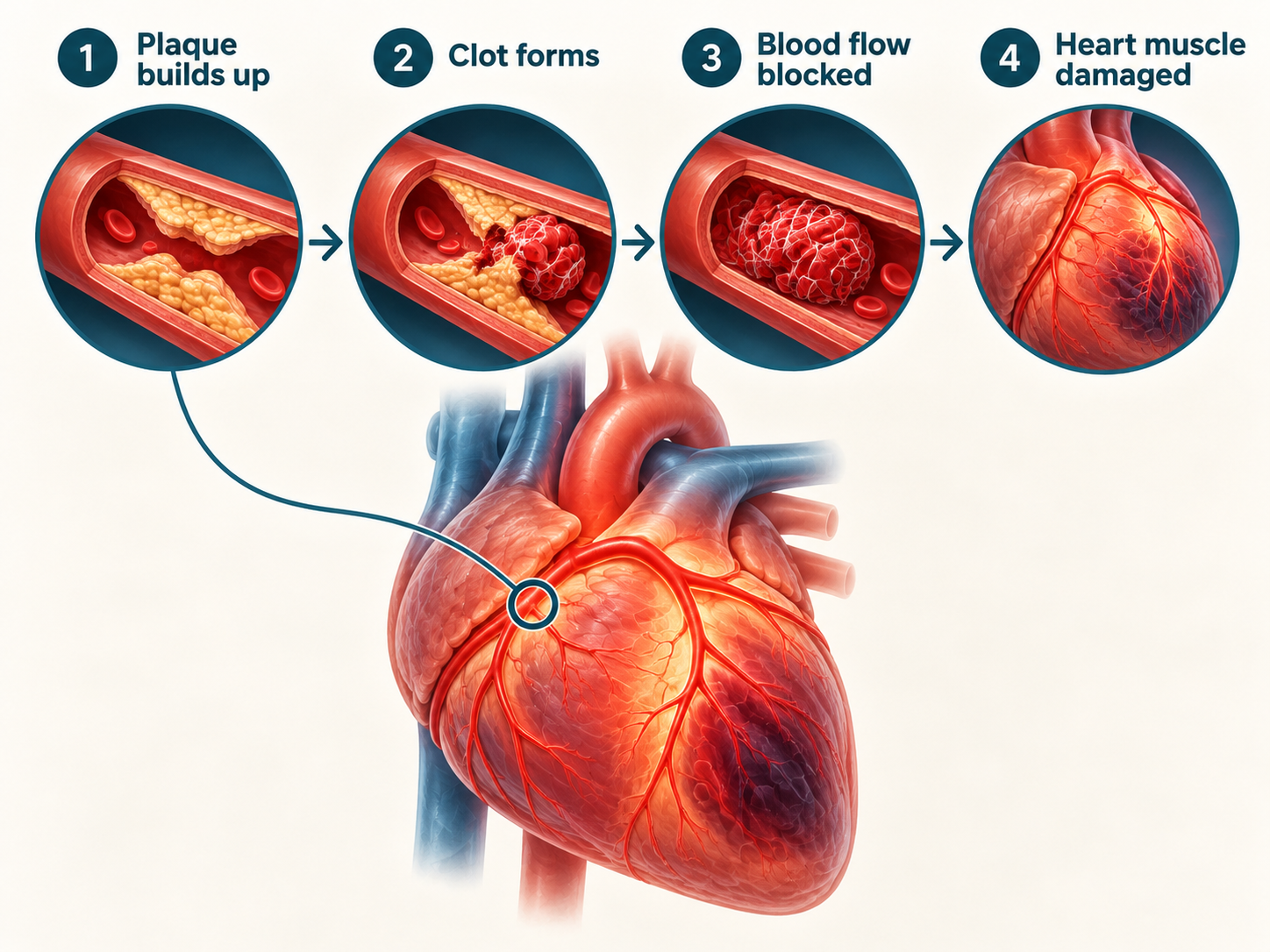
Think of your heart as a pump that works continuously to send blood around your body. But just like every other muscle, the heart itself also needs oxygen-rich blood to keep working.
This blood reaches the heart muscle through special blood vessels called coronary arteries. Imagine them as pipes supplying blood to the heart.
Over time, fatty deposits containing cholesterol, called plaques, can build up within the walls of these arteries. Sometimes, a plaque breaks open, causing a blood clot to form at that spot. This clot can suddenly block the artery, reducing or stopping the flow of oxygen-rich blood to part of the heart muscle.
Without enough oxygen, the affected heart muscle begins to suffer damage. This is what happens during most heart attacks, medically known as myocardial infarctions.
The longer the blood supply remains interrupted, the greater the potential damage. That’s why getting medical help quickly is so important.
Medical reference: American Heart Association — What Is a Heart Attack?
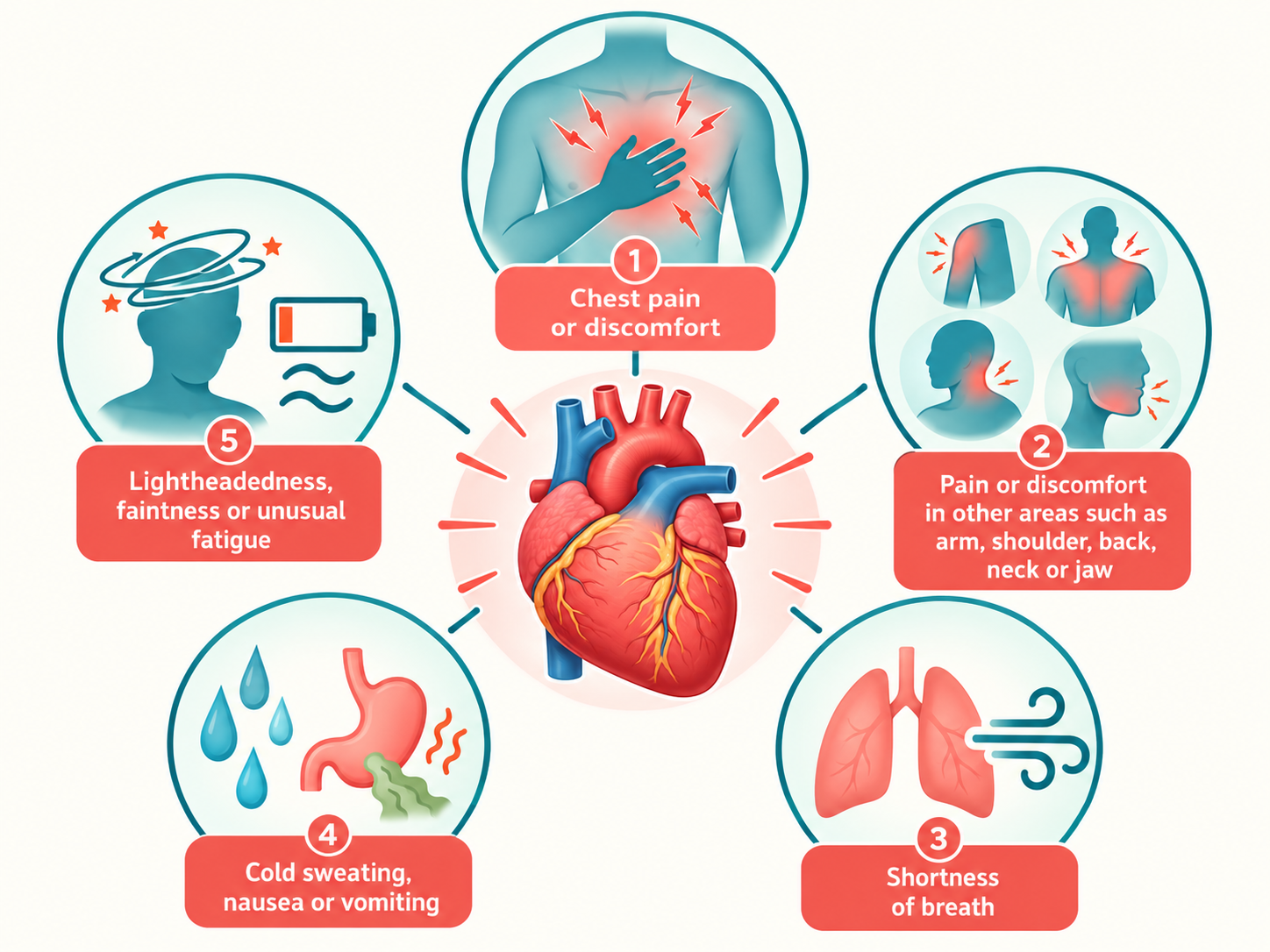
5 Important Warning Signs of a Heart Attack
1. Chest Pain or Discomfort
This is the most common symptom of a heart attack.
But here’s something worth knowing: it doesn’t always feel like severe pain.
Some people describe it as:
- Pressure or heaviness in the chest
- Tightness or squeezing
- A feeling of fullness or discomfort
- Pain in the centre of the chest
The discomfort may last for several minutes or disappear and return.
People sometimes dismiss these sensations as indigestion or another minor problem. Although chest discomfort can have many causes, a possible heart attack should never be dismissed without appropriate medical assessment.
Medical reference: American Heart Association — Warning Signs of a Heart Attack
2. Pain or Discomfort in Other Parts of the Body
Not all heart attack symptoms stay in the chest.
Some people experience pain or discomfort in their:
- One or both arms
- Shoulders
- Back
- Neck or jaw
- Upper abdomen
The discomfort may spread from the chest, but it can also occur without obvious chest pain.
That’s why it’s important to recognise the overall pattern of symptoms rather than expecting everyone to experience the same thing.
Medical reference: CDC — About Heart Attack Symptoms
3. Shortness of Breath
Imagine feeling unusually breathless while doing something that normally wouldn’t leave you struggling for air.
Shortness of breath can be another warning sign of a heart attack.
It may occur alongside chest discomfort, but sometimes it happens without chest pain.
Of course, breathlessness has many possible causes. However, new, unexplained or severe breathlessness can indicate a serious medical problem and should not be ignored.
Medical reference: American Heart Association — Heart Attack Warning Signs
4. Cold Sweating, Nausea or Vomiting
A heart attack doesn’t always announce itself through pain.
Some people may suddenly develop a cold sweat, feel nauseated or vomit. Others describe an uncomfortable sensation resembling indigestion.
These symptoms are not specific to heart attacks and can happen for many other reasons.
But when they occur with chest discomfort, breathlessness or other concerning symptoms, it’s important to consider the possibility of a heart attack.
Medical reference: NHS — Heart Attack Symptoms
5. Lightheadedness, Faintness or Unusual Fatigue
Some people feel dizzy, lightheaded or unusually weak during a heart attack.
Others experience unexplained tiredness that seems different from their usual fatigue.
These symptoms can be associated with many conditions, so feeling tired or dizzy alone doesn’t necessarily mean you’re having a heart attack.
However, when they are sudden, significant or accompanied by other possible heart attack symptoms, they deserve prompt medical attention.
Medical reference: American Heart Association — Heart Attack Symptoms in Women
Do Heart Attack Symptoms Differ Between Men and Women?
Yes, there can be differences, but there’s an important misconception worth clearing up.
Chest pain or discomfort remains the most common heart attack symptom in both men and women.
Women, however, are more likely to report additional symptoms such as nausea, breathlessness, unusual fatigue, or discomfort in the back, shoulder or jaw.
This can sometimes make symptoms harder to recognise, especially when chest discomfort is mild or absent.
The key message is simple: heart attacks don’t look identical in everyone.
You can read more in the American Heart Association’s guide to heart attack symptoms in women.
What Should You Do If You Suspect a Heart Attack?
Call your local emergency services immediately.
You don’t need to be completely certain that it’s a heart attack before seeking emergency help.
While waiting:
- Stop what you’re doing and rest in a comfortable position.
- Avoid unnecessary physical activity.
- Follow the instructions given by the person answering your emergency call.
- Do not drive yourself to the hospital.
If someone becomes unresponsive and is not breathing normally, begin CPR and use an automated external defibrillator (AED) if available, following emergency-service instructions.
A suspected heart attack requires urgent assessment. Healthcare professionals may use an electrocardiogram (ECG) and blood tests, including troponin measurements, to help determine what’s happening.
Don’t wait for every warning sign to appear, and don’t assume everything is fine simply because the discomfort improves.
For further guidance, see the NHS heart attack information page.
The Takeaway: Awareness Makes a Difference
The purpose of learning about heart attack symptoms isn’t to make you worry about every ache or discomfort.
It’s to help you recognise when something may need urgent attention.
Not every episode of chest pain is a heart attack, and not every heart attack presents with dramatic symptoms. Knowing the warning signs and acting promptly when one is suspected can make an important difference.
You don’t need to diagnose a heart attack yourself. You just need to recognise when it’s time to get help.
At THEPULSEDOC, we believe that understanding your heart is an important part of looking after it.
Frequently Asked Questions (FAQs)
1. Can a heart attack happen without chest pain?
Yes. Although chest discomfort is the most common symptom, some heart attacks occur without obvious chest pain. Symptoms may include breathlessness, nausea, unusual fatigue or discomfort in other parts of the upper body.
2. Can a heart attack feel like indigestion?
Yes. Some people experience burning, heaviness or discomfort resembling indigestion. Because the symptoms can overlap, you should not assume new or concerning chest or upper abdominal discomfort is harmless.
3. Do heart attack symptoms always begin suddenly?
No. Some heart attacks cause sudden, intense symptoms, while others begin gradually with milder discomfort. Symptoms may also come and go.
4. Should I wait to see whether the symptoms go away?
No. If you suspect a heart attack, seek emergency medical help immediately, even if symptoms are mild, uncertain or appear to improve.
References
- American Heart Association (AHA). Warning Signs of a Heart Attack. https://www.heart.org/en/health-topics/heart-attack/warning-signs-of-a-heart-attack
- American Heart Association (AHA). What Is a Heart Attack? https://www.heart.org/en/health-topics/heart-attack/about-heart-attacks
- American Heart Association (AHA). Heart Attack Symptoms in Women. https://www.heart.org/en/health-topics/heart-attack/warning-signs-of-a-heart-attack/heart-attack-symptoms-in-women
- American College of Cardiology / American Heart Association. 2025 Guideline for the Management of Patients With Acute Coronary Syndromes. https://professional.heart.org/en/science-news/2025-guideline-for-the-management-of-patients-with-acute-coronary-syndromes
- Centers for Disease Control and Prevention (CDC). About Heart Attack Symptoms, Risk and Recovery. https://www.cdc.gov/heart-disease/about/heart-attack.html
- National Health Service (NHS). Heart Attack. https://www.nhs.uk/conditions/heart-attack/
Medical Disclaimer: This article provides general health education and does not replace personalised medical advice, diagnosis or treatment. If you suspect a medical emergency, contact your local emergency services immediately.
General education only; not individual medical advice. Speak with a qualified healthcare professional about personal health concerns.
For a suspected emergency, call your local emergency service immediately.